There is a strange habit that almost every engineering student develops. We wait until something is perfect before we show it to anyone.
We write the code, fix the bugs, redesign the interface, add another feature, change the presentation, and then promise ourselves that we will finally show it when it is “ready.”
But what if ready is not a stage you reach before showing people? What if showing people is how you become ready?
That idea sits at the heart of building in public — sharing what you are working on while you are still working on it, instead of waiting until the finished product looks impressive.
The internet is the greatest distribution platform ever created.
The advantage of starting before you are ready
Pieter Levels became known for launching projects publicly and sharing the process behind them. Instead of disappearing for months to build something in private, he showed people what he was creating, what was working, and what was failing.
That approach creates something most student projects never get: an audience that can react while the product is still changing.
Imagine building a college project and having ten people tell you that the main feature you spent two weeks developing is something they would never use. That might sound disappointing.
But discovering that before spending another two months building it is actually useful.
Students already have everything they need to start
You don’t need an office.
You don’t need a large team.
You don’t need thousands of followers.
And you certainly don’t need a perfect business plan.
An engineering student already has access to something extremely valuable: time to experiment, classmates to test ideas with, teachers who can give feedback, hackathons to build for, and the internet to distribute what they create.
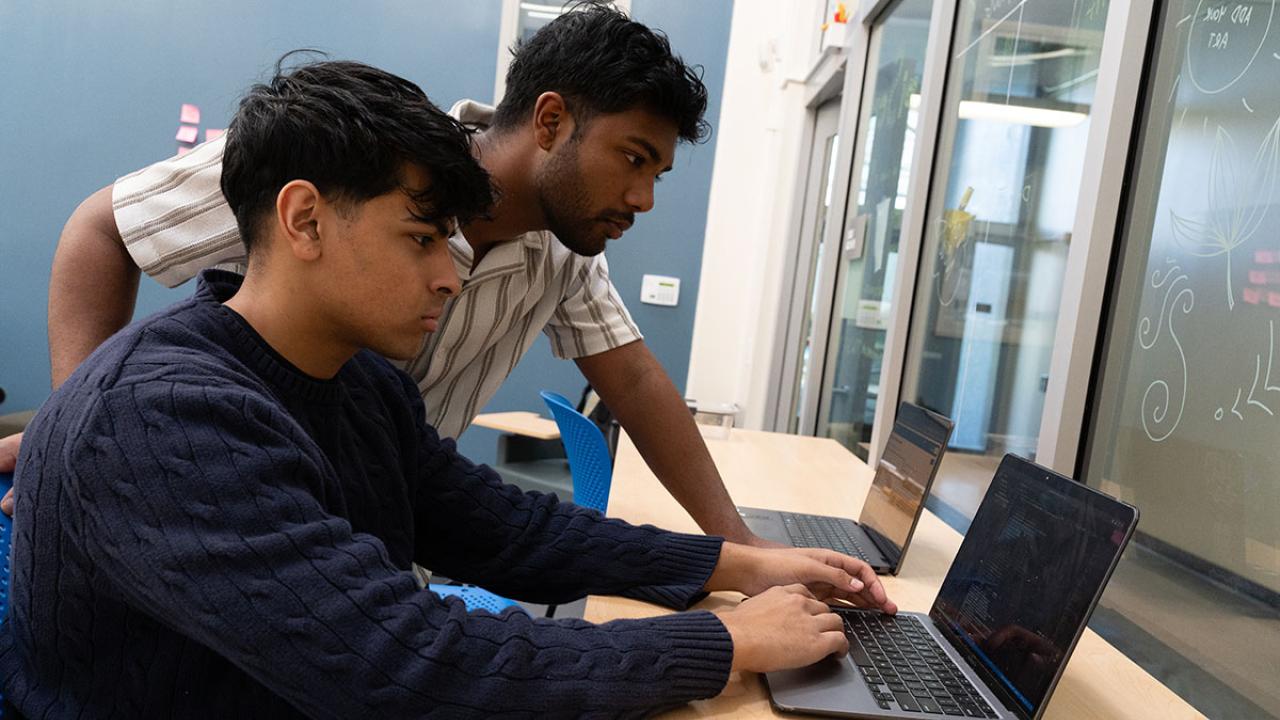
The first version of a project could be as simple as a working website, a small mobile application, a GitHub repository, or even a short post explaining the problem you are trying to solve.
The important part is that someone other than you can see it.
Building in public creates accountability
There is another advantage that is easy to underestimate: accountability.
When you tell people that you are building something, stopping becomes a little harder. Every update creates a small commitment to continue.
For a student, this can be surprisingly powerful.
Instead of saying, “I am going to learn JavaScript someday,” you can post what you learned today.
Instead of saying, “I will build a project this semester,” you can show the first version.
Instead of keeping your GitHub repository empty, you can document the progress.
You are no longer waiting for motivation. You are creating evidence of progress.
Your first version does not have to impress everyone. It has to teach you something.
Your failures become part of the story
One of the biggest misconceptions about building in public is that everything you share has to look successful.
It doesn’t.
A project that crashes is still progress if you explain what caused the problem. A feature nobody uses is still useful if it teaches you something about your users. A rejected idea can be more educational than a successful presentation.
Engineering students already understand debugging in code. Building a product is similar. You try something, observe the result, identify the problem, change the approach, and try again.
The difference is that the “bugs” are sometimes not in the code.
Sometimes the bug is the idea itself.
I can just go and ship.
Don’t confuse visibility with validation
There is one important warning.
Building in public does not automatically make an idea successful.
Getting likes is not the same as getting users. Followers are not the same as customers. Views are not proof that a product solves a real problem.
The real goal is feedback.
If ten people see your project and two actually try it, those two users may teach you more than a hundred likes ever could.
The question is not: “How many people saw my post?”
The better question is: “What did I learn from the people who interacted with what I built?”
Start with something small
If you are a student thinking about building in public, don’t begin by announcing that you are creating the next billion-dollar company.
Start smaller.
- Build a timetable application.
- Create a simple campus marketplace.
- Make a tool that solves one annoying problem in your department.
- Build a website for a local business.
- Automate one repetitive task.
Then share the process.
- Day 1: Explain the problem.
- Day 5: Show the first prototype.
- Day 10: Share what went wrong.
- Day 20: Show what changed after feedback.
- Day 30: Let people try it.
Suddenly, you don’t just have a project. You have a story of how the project evolved.

The real portfolio is the process
A certificate can prove that you completed a course.
A resume can say that you know Java, Python, cloud computing, or web development.
But a real project can demonstrate those skills.
And documenting the project demonstrates something else: that you can identify a problem, build a solution, communicate your work, accept feedback, and keep improving it.
That combination is difficult to communicate with a list of technologies alone.
Programming, startups and technology — open audio
Listen while reading about building and experimenting.
An open-licensed technology and startup discussion that complements this piece’s ideas about building products and learning through experience. Audio source and license information.
The takeaway
Building in public is not about becoming an influencer.
It is not about posting every hour.
It is not about pretending that every experiment is a success.
It is about replacing secrecy with feedback and perfectionism with progress.
As an engineering student, you already spend years learning how to build things. The next step is learning how to put those things in front of real people and listen to what happens.
Your first project may fail.
Your second may be ignored.
Your third might teach you something that changes the way you build.
That’s okay.
Because the goal isn’t to make your first project perfect. The goal is to make your next project better.
You don’t have to build in public forever. But before you graduate, build something small, show it to the world, and let the world teach you what to build next.
Next in this series: Why your first users matter more than your first investors — and how talking to five real users can completely change a product.
Building something and want a second opinion? vsbecell@gmail.com — or come find E-Cell at V.S.B. Engineering College, Karur.